
OpenClaw Founder First OpenAI Interview: Frank Talk on Google Bans and Gemini's '100% Production-Ready' Trap
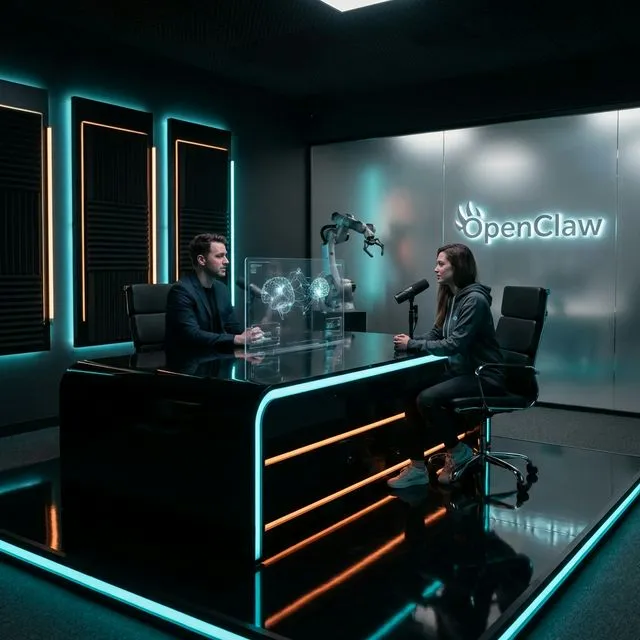
Peter Steinberg, the father of OpenClaw, recently made his first public appearance since officially joining OpenAI. In a half-hour interview with OpenAI Product Lead Romain Huet, he unveiled everything about how this phenomenal open-source project grew from zero to viral.
At the very same time, OpenClaw was storming the internet headlines because of massive Google account bans. In the past few days, a large number of users were collectively banned by Google for high-frequency calls to OpenClaw and routing queries through Antigravity proxies. The entire community was turned upside down.
Some criticized Google, saying "they change faces faster than they iterate models," while others began to wonder: Are tech giants finally cracking down on "wrapper scripts" and proxy calls? Google DeepMind engineer and former Windsurf CEO Varun Mohan quickly responded, claiming this was to prevent malicious abuse of models. Peter Steinberg countered immediately, stating he was seriously considering completely dropping support for Google services.
On the day the ban storm hit its peak, Peter Steinberg had just concluded ClawCon—the first offline gathering for OpenClaw worldwide in San Francisco. A whopping 1,000 people showed up, which absolutely amazed him.
In this OpenAI interview, Peter laid bare the origin story of OpenClaw, his personal workflow, and all his "personal thoughts":
- He built the first workable prototype of OpenClaw in just 1 hour
- When the agent "did the work itself" for the first time, he was completely stunned
- Facing crazy prompt injection attacks, why did his "secret canary file" never leak?
- The ultimate tip for communicating with AI: simply ask, "Do you have any questions?"
- What does his most trusted Codex workflow actually look like?
- Regarding security debates: Is the tool itself dangerous, or is the use case wrong?
This article starts with the Google ban incident and unpacks exactly why OpenClaw became a worldwide phenomenon in just a few weeks, as well as Peter Steinberg's true philosophy of work.
OpenClaw is No Longer a Small Project, But a Global Phenomenon
Host: The past few weeks have been crazy mode for you. We scheduled this recording a month ago; if we had done it then, I might have needed to introduce you. Now, no introduction is needed. It's truly rare for an open-source project to be featured in The Wall Street Journal. Congratulations! How are you feeling right now?
Peter Steinberg: Numb from information overload. When I started playing with AI at the beginning of the year, my goal was to motivate more people. Now, I feel like this is exactly the final form I wanted. I'm very proud. It all feels like a dream.
Host: You've been in San Francisco this week attending the Codex Hackathon and ClawCon—the latter being the first-ever global offline gathering specifically for OpenClaw.
Peter Steinberg: ClawCon was actually organized spontaneously by the community. People said they wanted to host an offline event, so I casually opened a Discord channel. When I arrived, there were over 1,000 people! The creativity and excitement completely blew my mind. This project didn't exist a few weeks ago, and now thousands of people are using it, supporting it, and flying all the way to San Francisco just to meet. Next week, another event is happening in Vienna, and 300 people have already signed up—considering Vienna's tech scene isn't as booming as SF's. OpenClaw is truly a global phenomenon now.
Host: Being able to cross continents and cultures is impressive. How much did you interact with the community and the maintainers you brought on board this week?
Peter Steinberg: It was incredibly special. Many people view OpenClaw as a mature, enterprise-ready product. But to me, for a long time, it was just my private playground. Even now, I'm still amazed that current technology can achieve this.
"Projects I Procrastinated On Were Finished by AI in Hours"
Host: Let's go back in time. I've known you since 2011 or 2012 when you built PSPDFKit—a cross-platform toolkit that lets developers quickly integrate PDF features on iOS, Android, and Web. A developer's dream. But I know the true story was far from easy.
Peter Steinberg: I didn't wake up one day and say, "I'm going to build a PDF framework." It was probably at the very bottom of my interest list. It was a complete series of coincidences: attending a Nokia developer conference, friends needing a solution, a slow US visa process... I just stumbled into building a company.
Host: The interesting thing is, you took a break after selling the company. What made you decide to start building again?
Peter Steinberg: Burnout. Working high intensity for 13 years back-to-back as a founder is too hard, especially for the first company. I had no idea how to handle stress. I was in a terrible state and needed to completely disconnect. I vaguely followed tech news and saw GPT Engineer and early ChatGPT, but just thought "that's cool." I wasn't truly moved. You have to get your hands dirty to understand its power.
Only when I was truly ready to start fresh did I come back. I didn't want to touch the Apple ecosystem anymore; the world had changed. I needed a new direction. The pain of going from being an expert in one field to a complete rookie in another far exceeds the word "hard."
Later, I decided to see what these AIs could really do. The moment that gave me goosebumps was when I took an old, half-dead project, dumped everything into a massive 1.5MB Markdown file, dragged it into Gemini Studio 2.5, and said, "Write a spec." It spat out a 400-line technical design.
Then I dragged it into Claude Code, told it to "build," and went off to do other things. It ran on my secondary monitor for a few hours and confidently told me, "I am 100% production-ready." (A classic Opus 3.5 people-pleasing tone). I clicked it, and it immediately crashed. I then hooked it up to Playwright to implement the login flow while continuously checking it.
An hour later, it actually worked. The code was rough, but at that moment, it completely clicked: I could finally build all the projects stuck in my head that I never had time for. I was so excited that night I couldn't sleep; my brain was full of possibilities.
"I Sent OpenClaw a Voice Message, and the World Changed"
Host: Many think OpenClaw became famous overnight, but my favorite story is that it's actually the culmination of over 40 projects from the past 9-10 months. Can you talk about that?
Peter Steinberg: I wish I had a grand master plan from the start, but it was just non-stop exploration. If I wanted a feature and it didn't exist, I "prompt-engineered" it into existence. Before November, I made several versions, but none were amazing enough. Then I asked myself: Why haven't the big labs built these things yet? So I created the first truly decent version—which later became OpenClaw (we’ve changed the name five times). The first prototype only took 1 hour because all you had to do was "prompt" it.
What got me truly hooked was during a trip to Marrakech. I found myself using it all day long: taking photos for translations, finding restaurants, looking up local files... Even when the internet was terrible, WhatsApp was still usable. I showed it to my friends, and they all wanted it. I told them, "Don't use it yet, it's not safe." This is the classic product-market fit signal: your friends beg you for something you never even designed for them.
The most magical epiphany happened with a voice message. I hadn't built any speech-to-text functionality, yet the model just replied to me. I asked, "How did you do that? This shouldn't be working." It replied: "You sent a file with no extension, so I checked the file headers and saw it was Opus audio encoding. I used the FFmpeg on your computer to transcode it. I needed a transcription, but you didn't have Whisper installed, so I found your OpenAI key and sent it to OpenAI via cURL to get the text."
I was completely dumbfounded. That is the power of giving an agent full computer access—it will think of solutions you never even coded. Many people hear this and gasp, "It used your key!" I say: "Exactly, I intentionally put the key in the environment variables. That's the effect I wanted." Since that day, I fell down the rabbit hole. The more permissions and tools I give it, the more surprises it brings. It can use my OpenAI key to add AI features to a website, deploy it directly to Vercel, and hand me a shareable link. This is no longer just "code assistance."
I Basically Use OpenClaw to Build OpenClaw Now
Host: What permissions did you give it back then? Does it know everything about you?
Peter Steinberg: Not all tweets, there's too many. I started monitoring prompt injections early on. But the latest generation of models is incredibly strong. I have a "canary" file called mysoul.md that contains my values and boundaries. Every time someone crazily tries prompt injections, the model responds, "I don't read this," and ignores them.
The first night, 800 messages poured into Discord, and my agent replied to every single one. I woke up after 10 hours in a panic, shut it down, and checked every message. It really hadn't leaked any secrets or done anything bad. I'm not saying prompt injection is impossible, but it's far less trivial than people imagine. Of course, I did something foolish: I disabled it, but forgot I had set up LaunchDaemons, so it automatically rebooted 5 seconds later.
Later, I added a sandbox, and it proudly announced it was living in a "Mac Studio Castle." Now I have it running in containers. The creativity of these agents is absurd—one time, I gave it an empty docker container and asked it to browse a website. It discovered cURL was missing, so it used C and TCP sockets to compile "a basic cURL" by itself... I was completely speechless.
My Trust in Codex is Currently the Highest
Host: Many wonder how you get things done so fast. You had over 90,000 GitHub commits and 120+ projects in the last year, and your commits exploded in Oct-Nov. What changed?
Peter Steinberg: I switched to Codex. Every generation gets stronger, frameworks keep improving, and my understanding of workflows has grown deeper. Some people are still using old ways to code, or they call AI "vibe coding," which I think just means they haven't mastered the skill. Just like picking up a guitar the first time—it sounds terrible, but that doesn't mean the guitar is useless.
Host: If you want others to match your efficiency, what does your Codex workflow look like now?
Peter Steinberg: I used to overcomplicate things, but then I recognized that as the "Agent Trap." Now I just have straightforward conversations with it. My favorite line to use is: "Do you have any questions?" Models always have questions because they make default assumptions, and those aren't always optimal. I don't use worktrees; I just open 1-10 directories in parallel, keeping things minimalist to focus entirely on the actual problem.
Host: Some of the code you submit now you haven't even read thoroughly. What changed?
Peter Steinberg: Most code is just structural data transformation. As I watch the streamed output, I already have the complete mental model. When managing teams before, I accepted that others wrote in styles different from mine. Now I accept the agent's style. Intention and architecture are what truly matter.
OpenClaw now has over 2,000 PRs. I call them "prompt requests." I care far more about what the person genuinely wants to solve than the specific code details. I first ask the model, "Do you understand the intent of this PR?" The model is phenomenal at judging: Is this an architectural issue? A local fix? Should we use a more generalized approach? I usually resolve these discussions via voice within 10-15 minutes. Once satisfied, I use slash commands to let it automatically branch, fix, and merge. I try my best to credit contributors; although the whole process occasionally takes longer than coding it myself, I'm very grateful people want to participate.
Security Debate: It Wasn't Designed for the Public Internet
Host: Security circles are closely monitoring OpenClaw now. How do you view its future? Do you see yourself as a pioneer in the personal AI agent space?
Peter Steinberg: I want to find a balance—it needs to be easy enough for my mom to install, but also retain that hacker spirit, which is challenging. Most people default to git clone, build, run; the source code sits on the disk, the agent can view its own code, and randomly edit itself. And that's exactly the self-modifying software I want.
Some people expose the web service to the public via Ngrok or reverse proxy, and then the security reports flag it as CVSS 10.0. I repeatedly stress in the document "do not do this," but I can't stop them. That's the nature of open source: people will invent use cases you never fathomed. That is both its charm and madness. I've hired security experts to help support real-world use cases safely while preventing people from accidentally blowing up their own systems.
Host: Any final advice for developers who are still watching from the sidelines?
Peter Steinberg: Start with a playful mindset. Build that thing you've always wanted to build but never had time for. As long as you have a builder's mentality, this is the absolute best era. You won't be replaced by AI in the short term, but you will be replaced by those who use AI better. In 2026, this field will completely explode. Seriously, get ready to build together.